

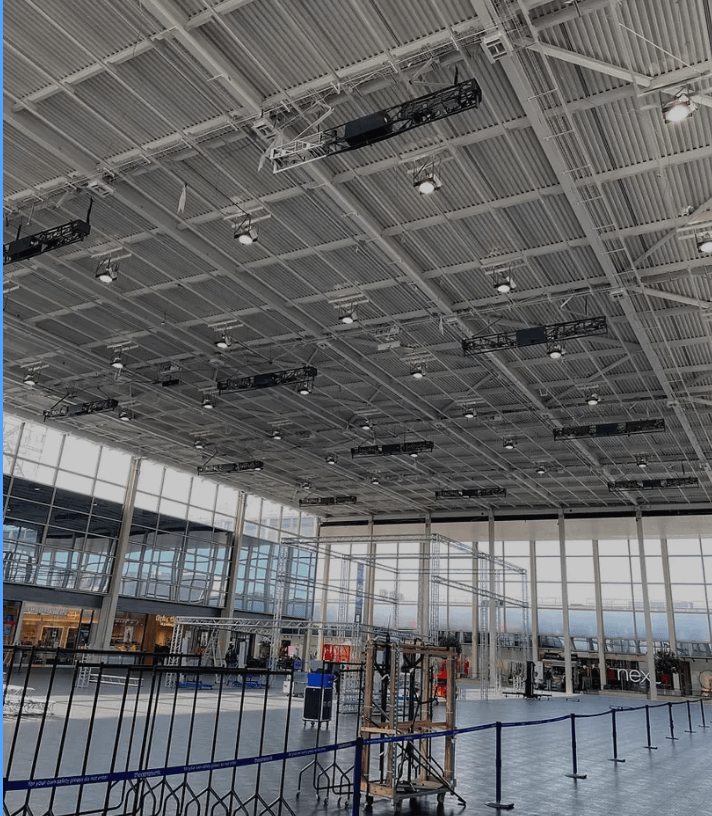
In commercial interiors, the ceiling plays a key role in how a space is perceived. Before customers or staff engage with the environment, the condition of the ceiling contributes to the overall appearance, light quality and sense of cleanliness within the room.
Over time, a suspended ceiling can become stained, discoloured or uneven in colour due to dust, moisture and general wear. In office, retail and commercial environments, this gradual deterioration affects the overall look of the space and can make an otherwise well-maintained interior appear tired.
While full replacement is often considered, it is not always necessary. Where the suspended ceiling system remains structurally sound, spraying provides a controlled way to restore the surface. Instead of removing materials and installing a new ceiling, the existing structure can be refurbished on-site using specialist coatings, improving appearance while keeping disruption low.
At Sprayon, we deliver ceiling spraying across the UK, helping commercial properties improve internal environments through a structured spraying process designed to create a smooth, uniform finish with minimal disruption.
What Is Ceiling Spraying?
Ceiling spraying involves applying specialist coatings to a ceiling surface using professional spray equipment. This typically includes suspended ceiling systems, plasterboard and exposed structural ceilings.
Rather than focusing only on individual ceiling tiles, the process treats the entire ceiling as a continuous surface. Spray paint is applied evenly across panels, grid and fixtures, creating a consistent finish across the full area.
Compared to brush or roller methods, spraying delivers:
- More even coverage
- A smoother surface finish
- Greater consistency in colour and texture
This approach is particularly effective on suspended ceiling systems where visual uniformity across the entire ceiling is important. Materials such as mineral fibre, metal panels including plain metal pan systems, and drywall ceilings can all be treated using suitable coatings, provided the surface condition is appropriate.
When to Consider Spraying Instead of Replacement
The decision between spraying and replacing depends on the condition of the ceiling system as a whole.
Spraying is typically suitable where:
- The ceiling is stained or discoloured
- There are minor stains or surface marks
- The colour no longer matches the updated space
- The ceiling needs refreshing ahead of a new lease or refurbishment
In these situations, the issue is primarily aesthetic. The suspended ceiling remains functional, and spraying provides a way to restore its appearance without removing and reinstalling materials.
Replacement becomes necessary where there are deeper issues, such as:
- Persistent moisture or water stains affecting the structure
- Damaged panels or failing grid systems
- Concerns around fire rating or acoustic performance
- Loss of structural integrity within the ceiling system
In practice, many commercial ceilings can be refurbished rather than replaced when assessed correctly.
Benefits of Ceiling Spraying
Improving overall appearance
Spraying restores a clean and consistent finish across the entire ceiling, improving the overall look of the room and supporting a more professional environment.
Avoiding full replacement
Where the ceiling structure remains sound, spraying avoids the need for removing materials and installing a new ceiling, reducing cost and disruption.
Achieving a uniform finish
Spray paint allows for even coverage across large surface areas, including grid, panels and integrated elements, creating a smooth and consistent result.
Reducing disruption in commercial spaces
The process is carried out on-site with careful prep work, including protecting walls, floors and furniture. This allows work to be completed while maintaining normal operations where possible.
Supporting environmentally friendly refurbishment
Retaining the existing ceiling reduces waste and avoids unnecessary disposal of materials, making it a more environmentally friendly approach compared to replacing.
Maintaining performance where appropriate
With suitable specialist coatings and controlled application, it is possible to maintain key characteristics such as acoustic properties and fire rating.
How the Ceiling Spraying Process Works
The process begins with an assessment of the ceiling, including surface condition, materials and any signs of moisture or damage.
Preparation is essential. Surfaces are cleaned to remove dust and contaminants, as spraying over debris can affect adhesion and finish quality. Any stained areas or water stains may require treatment before coating.
All surrounding elements, including walls, floors, fixtures and furniture, are protected to prevent overspray. Once prepared, spray paint is applied using professional equipment to achieve even coverage across the surface. The focus is on creating a consistent finish without overloading the material, particularly where acoustic surfaces are involved.
Coatings used are typically water based and virtually odourless, allowing the space to return to use quickly once drying time is complete. A final inspection ensures consistency across the entire ceiling and confirms the required standard has been achieved.
Spraying vs Painting a Ceiling
There is a clear difference between professional spraying and attempts to paint a ceiling using standard methods.
Using a brush or roller to paint ceiling tiles or a suspended ceiling often leads to:
- Uneven finish
- Visible marks
- Inconsistent colour
- Potential impact on acoustic performance
Professional spraying uses controlled techniques and suitable coatings to create a uniform surface across the entire ceiling while reducing these risks.
Environmental and Operational Considerations
Spraying an existing ceiling extends the life of materials that are still fit for purpose. This reduces waste and avoids unnecessary replacement, supporting more environmentally friendly refurbishment strategies.
Operationally, spraying is also less disruptive. Replacing a ceiling involves removal, disposal and installation, whereas spraying is a controlled on-site process with shorter timelines.
For commercial environments where downtime affects business operations, this is often a deciding factor.
When Replacement Is Still Required
Spraying is not appropriate in every situation.
Replacement should be considered where:
- The ceiling has structural damage
- There is ongoing moisture affecting the system
- Fire or acoustic requirements must be guaranteed
- The existing ceiling system is no longer fit for purpose
In these cases, installing a new ceiling provides a more reliable long-term solution.
Maintenance After Ceiling Spraying
Maintaining a sprayed ceiling is straightforward. Regular cleaning helps remove dust and maintain the overall appearance. Care should be taken to avoid excessive moisture, particularly with mineral fibre surfaces.
Routine inspections allow early identification of issues, helping extend the life of the ceiling and maintain performance over time.
Why Choose Sprayon?
We are a commercial spray painting company delivering on-site ceiling spraying services across the UK. We specialise in restoring suspended ceilings where the structure remains sound but the surface has deteriorated.
We begin with a site assessment to determine whether spraying is the right solution or if replacement is required. All work is carried out on site using professional equipment, with careful preparation to protect surrounding areas and minimise disruption within the building.
Our focus is on delivering a durable, high-quality finish that improves appearance while maintaining performance where possible.
Summary
Ceilings can often be sprayed instead of replaced when the structure remains intact and the issue is primarily cosmetic.
In these cases, spraying provides a practical way to improve appearance, extend the life of materials and reduce disruption.
Where structural or performance issues are present, replacement may still be required. The correct approach depends on a clear assessment of the ceiling rather than defaulting to removal.
Frequently Asked Questions
Can ceiling tiles be sprayed instead of replaced?
Yes, where ceiling tiles and the suspended ceiling system are in good condition and the issue is visual rather than structural.
Is it better to spray or replace ceiling tiles?
Spraying is often the better option when the tiles are intact and only require visual improvement. Replacement is more suitable where there is damage or performance concerns.
Can you paint suspended ceiling tiles?
Standard painting methods can damage tiles and affect performance. Professional spraying is the preferred approach for a consistent finish.
Does spraying affect acoustic performance?
If applied correctly using suitable coatings, acoustic properties can be maintained. Incorrect application may reduce performance.
Does spraying affect fire rating?
Coatings must be selected carefully. In some cases, applying paint can affect fire classification, so this should be assessed before work begins.
How disruptive is the process?
Spraying is carried out on-site with masking and controlled application, allowing work to be completed with minimal disruption compared to full replacement.